Capacity Before Crisis: What the Murrindindi Health Van Launch Showed Us About Community
Some days quietly remind you what’s possible when community comes together.
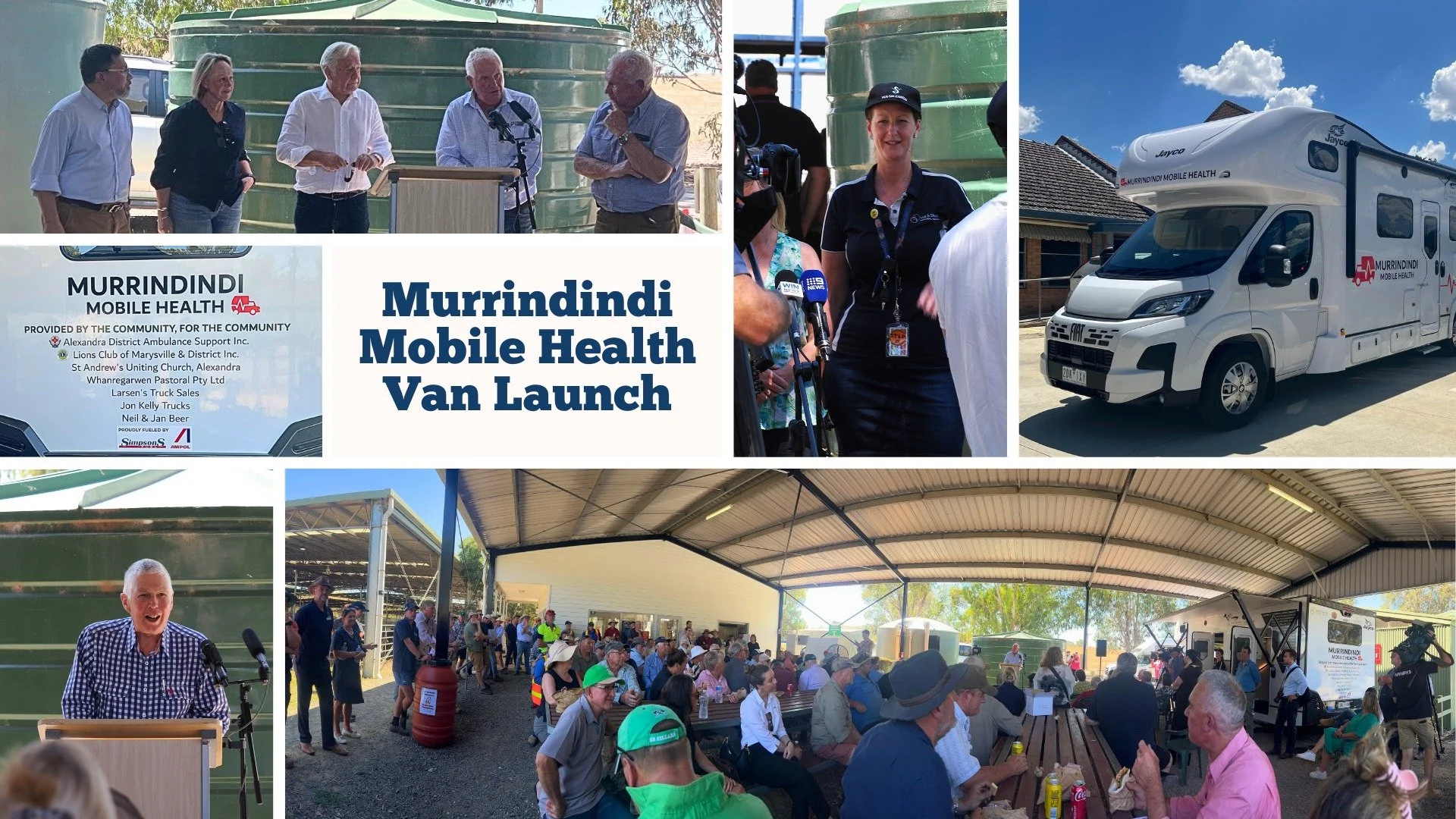
The launch of the Murrindindi Health Van at the Yea Saleyards was one of those days. While it included the formal handing over of keys, what it really represented was something far more important: a living example of capacity before crisis in action.
At a time when services are often talked about only after communities are stretched, exhausted or hurting, this project did the opposite. It identified a need early, trusted local knowledge, and backed people who were prepared to act before crisis forced the issue.
Led by Alexandra Events, an organisation I’m proud to be an Ambassador, alongside Yea & District Memorial Hospital, and powered by extraordinary community generosity, this initiative shows what proactive, preventative care can look like when it’s grounded in place and partnership. Add to that the remarkable contribution of Gerry Ryan and Jayco Australia, and what was delivered exceeded even the most hopeful early expectations.
This van is not just about health services.
It’s about access.
It’s about trust.
And it’s about showing up before people reach breaking point.
Grounding the need in place
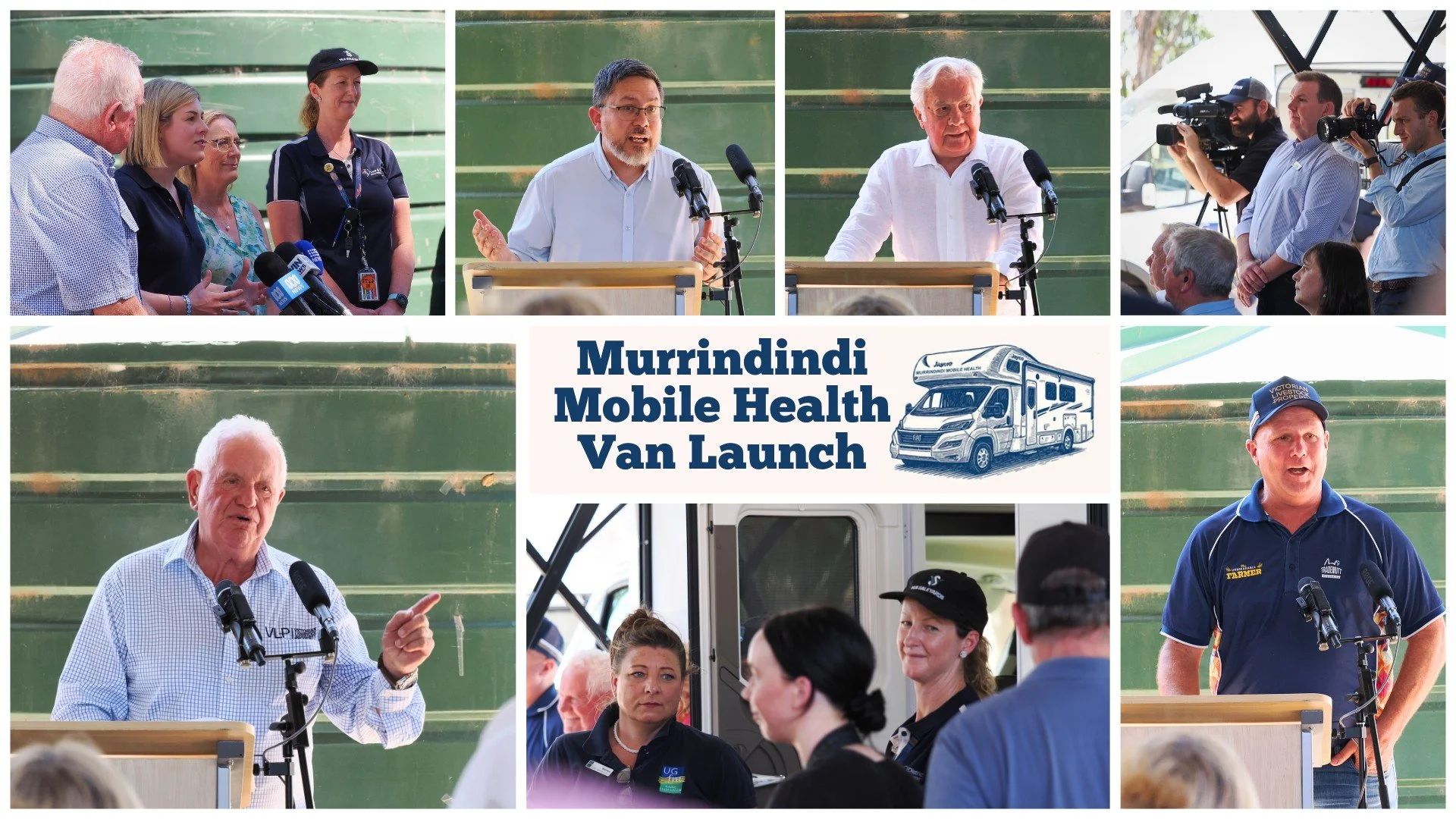
Opening the launch, Cr Damien Gallagher, Mayor of Murrindindi Shire, set the context clearly and honestly. Murrindindi is a large, diverse rural Shire where distance is part of daily life and that distance directly affects health access.
Many residents travel long distances for appointments. Preventative care is delayed or missed entirely due to transport challenges, time pressures, workforce shortages and competing responsibilities. Council hears this consistently, particularly from older residents, farmers, and families juggling work and care.
This is why Murrindindi Shire is rolling out a Shire wide Health and Wellbeing Plan focused on prevention, access and local solutions, building on existing collaborations like the Murrindindi Health Network. The Health Van, as the Mayor noted, is not theoretical policy it is that plan made practical.
Strong communities solve problems together, and this project began with a health service listening carefully to its community.
Proof that place-based outreach works
From a health service perspective, Ian Marshman, Acting Chair of Yea District Memorial Hospital, spoke to a challenge seen across rural Australia: delayed care.
Murrindindi’s health profile shows higher rates of chronic disease risk factors such as obesity and physical inactivity, alongside real and growing mental health pressures. Traditional clinic-based models simply don’t reach everyone particularly when geography and workforce shortages are factored in.
When Council asked a simple question what if we brought care to where people already are? the Farmer Health Outreach at the Yea Saleyards was born.
The Saleyards are trusted, familiar, and part of routine life for many farmers. By offering free, low barrier health checks and support in that setting, people engaged earlier and more openly. The lesson was clear: place matters. Outreach works when it feels normal, not clinical. And it shouldn’t be limited to one location.
Mental health, trust and showing up differently
When we talk about mental health in rural communities, we’re not talking about statistics. We’re talking about people, neighbours, mates, families people who turn up every day no matter how they’re feeling inside.
Rural mental health challenges are real, persistent and often invisible. Strength runs deep in these communities, but sometimes that strength becomes a double edged sword. When you’re known as the one who “just gets on with it,” asking for help can feel like failure.
That’s why initiatives like this matter.
Support works best when it’s local, familiar and wrapped in trust, not clipboards, pressure or labels. The Saleyards are a powerful place of connection. Outreach doesn’t demand anything there; it simply creates permission. Permission to talk. Permission to check in. Permission to say, “Yeah… things are a bit tough right now.”
Sometimes the most important step isn’t a diagnosis or referral. It’s a conversation. A quiet check in. Someone showing up and saying, you matter enough for us to be here.
Community ignition and scaling belief
As Caolan O’Connor from Alexandra Events shared, this project didn’t invent a model it helped scale one that was already working. At the Alexandra Truck, Ute and Rod Show, the community raised $114,000 in under 24 hours, sending a powerful message about local appetite for better access to care.
This project became community-owned very quickly, bringing together health services, volunteers, donors, businesses and everyday residents. The van is not a one off; it’s a platform able to move, adapt and respond to real needs over time.
Turning belief into a vehicle
To make that vision real, the right partner mattered. Gerry Ryan and Jayco Australia brought manufacturing capability, regional understanding and genuine belief in the purpose. The van has been purpose built for outreach, flexibility and long term service delivery. It now belongs to the community it serves.
For me, this project is exactly what capacity before crisis looks like, practical, local, human and preventative. Strong communities aren’t built in emergencies; they’re built in moments like this.
My hope is that the Murrindindi Health Van becomes both a catalyst and a benchmark for communities across Australia. Because if it helps even one person feel less alone, or creates one conversation that wouldn’t have happened otherwise, it’s already doing something incredibly powerful.
This is capacity before crisis.
And Murrindindi just showed Australia how it’s done.
To learn more about the project, visit:
👉 https://alexandraevents.com.au/murrindindi-mobile-health/